
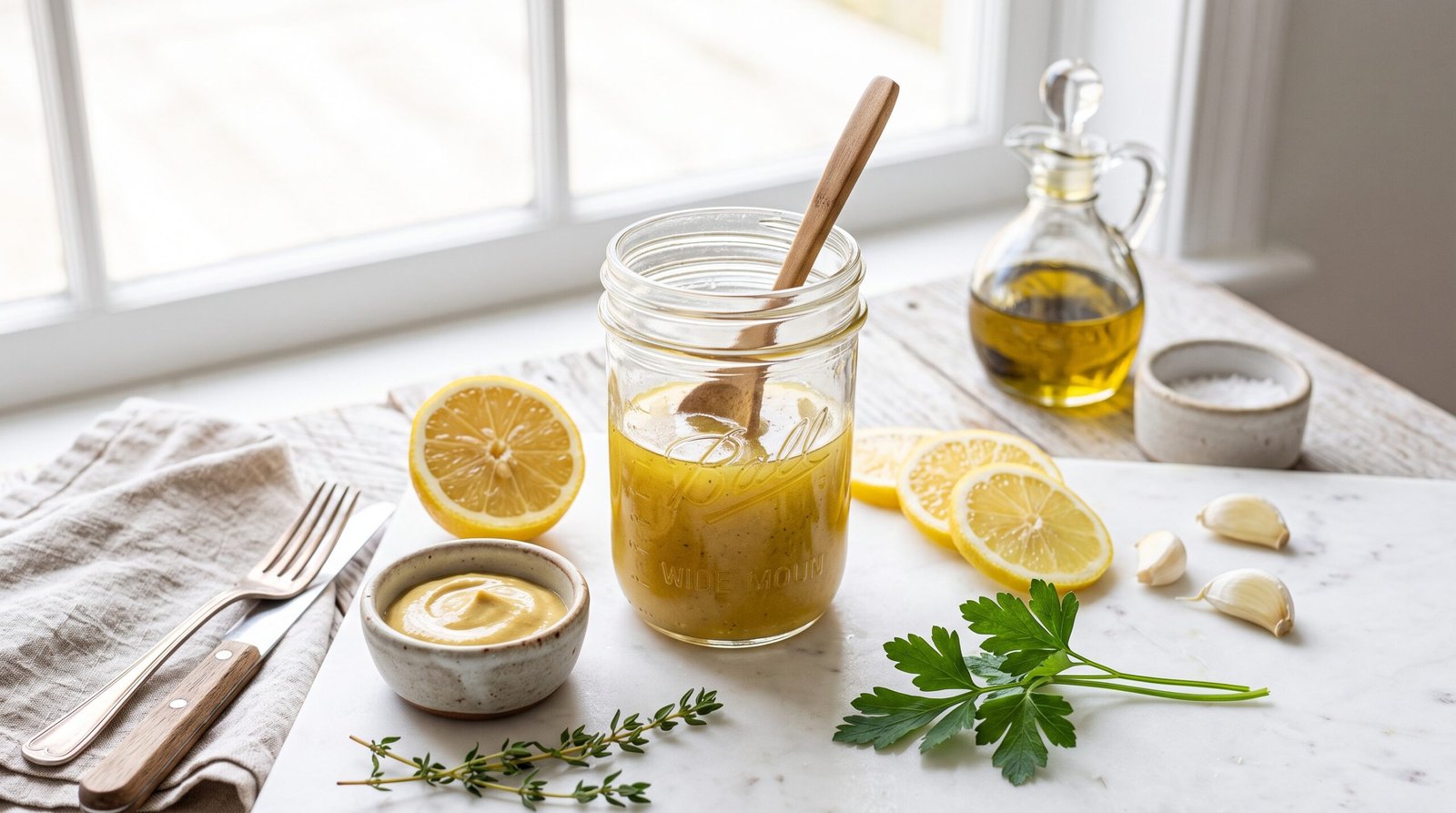
Brighten Any Salad: The Ultimate 5-Minute Simple Lemon Vinaigrette
Introduction
A great salad relies entirely on its dressing. Store-bought bottles may be convenient, but they’re often packed with artificial preservatives, seed oils, and hidden sugars. The good news? A homemade Simple Lemon Vinaigrette takes less than five minutes to make, uses basic pantry staples, and delivers a bright, restaurant-quality flavor that instantly transforms fresh greens, roasted vegetables, and grain bowls into something special.
Why You’ll Love This Recipe
✅ Clean & Healthy — Made entirely with real, whole-food ingredients, with no preservatives, additives, or refined sugars
✅ Quick & Easy — Just five main ingredients and five minutes of prep
✅ Versatile — Use it as a salad dressing, a marinade for chicken or fish, or a drizzle over warm roasted veggies
✅ Diet-Friendly — Naturally gluten-free, dairy-free, vegan, keto, and paleo
Ingredients You’ll Need
The secret to an exceptional vinaigrette lies in using quality ingredients in the right proportions:
- Fresh Lemon Juice (¼ cup) — Freshly squeezed is essential; bottled juice lacks the bright, clean acidity needed for balance.
- Extra Virgin Olive Oil (½ cup) — A good cold-pressed olive oil creates a rich, smooth base.
- Dijon Mustard (1 teaspoon) — Acts as a natural emulsifier, binding the oil and lemon juice while adding a subtle tangy kick.
- Honey or Maple Syrup (1 teaspoon, optional) — A touch of sweetness to balance the citrus acidity.
- Fresh Garlic (1 clove, minced or grated) — Adds savory depth.
- Fine Sea Salt & Freshly Cracked Black Pepper — To taste (start with ½ teaspoon salt and ¼ teaspoon pepper).
How to Make Lemon Vinaigrette (2 Easy Methods)
Method 1: The Jar Shake (Easiest)
- Add the lemon juice, Dijon mustard, minced garlic, honey (if using), salt, and pepper to a small glass mason jar.
- Pour in the olive oil.
- Seal the lid tightly and shake vigorously for 15–20 seconds until fully emulsified and creamy.
Method 2: The Whisk Method
- In a medium bowl, whisk together the lemon juice, Dijon mustard, garlic, honey, salt, and pepper.
- While whisking continuously, slowly drizzle in the olive oil in a steady stream until smooth and emulsified.
Flavor Variations to Try
This base recipe is easy to customize:
| Variation | Add-Ins | Best Paired With |
|---|---|---|
| Herb Lemon Vinaigrette | 1–2 tbsp chopped fresh herbs (parsley, dill, basil, oregano) | Greek salads, grilled chicken, pasta salad |
| Garlic Parmesan | 2 tbsp finely grated Parmesan | Caesar-style salads, kale salads |
| Shallot & Champagne | Swap garlic for 1 tbsp minced shallot | Butter lettuce, microgreens |
| Spicy Citrus | Pinch of red pepper flakes or cayenne | Grain bowls, roasted sweet potatoes |
Pro Tips for the Best Vinaigrette
- The Golden Ratio: Classic vinaigrettes typically use 3 parts oil to 1 part acid. Since fresh lemon juice is milder than distilled vinegar, a 2:1 ratio (½ cup oil to ¼ cup lemon juice) gives a brighter flavor without being too tart.
- Emulsification Matters: Dijon mustard isn’t just for flavor — it keeps the oil and liquid from separating.
- Warm Up Cold Oil: Olive oil naturally solidifies in the fridge. If your dressing hardens, set the jar on the counter for 5–10 minutes or run it under warm water, then shake well before serving.
How to Store Lemon Vinaigrette
- Refrigerator: Keep in an airtight glass jar for up to 7–10 days.
- Freezing: Not recommended — freezing alters the texture and dulls the fresh citrus flavor.
What to Serve with Lemon Vinaigrette
This versatile dressing goes beyond the basic garden salad:
- Arugula & Parmesan Salad — The peppery bite of arugula balances the rich oil and citrus.
- Grilled Chicken & Seafood — Use as a 30-minute marinade before grilling.
- Roasted Vegetables — Drizzle over hot roasted asparagus, broccoli, or carrots.
- Mediterranean Grain Bowls — Perfect over quinoa, chickpeas, cucumber, tomatoes, and feta.
Frequently Asked Questions
Can I use bottled lemon juice?
Fresh lemon juice is strongly recommended for the best flavor. Bottled juice often contains preservatives like sodium benzoate, which can leave a metallic aftertaste.
Why did my olive oil harden in the fridge?
This is actually a sign of purity! High-quality extra virgin olive oil naturally solidifies at cold temperatures. Just let it sit at room temperature for a few minutes and shake well before using.
How can I make this lower in calories?
You can replace up to half the olive oil with warm water or unsweetened vegetable broth, though this will result in a lighter, thinner texture.
Final Thoughts
Once you try this Simple Lemon Vinaigrette, you’ll never go back to store-bought dressing again. It’s fresh, customizable, and ready in minutes — the perfect finishing touch for salads, grain bowls, and grilled proteins alike.